Sunday, January 17, 2021

#67 Why Spread the Butter? Part 2 : Paul Butterfield and Little Walter

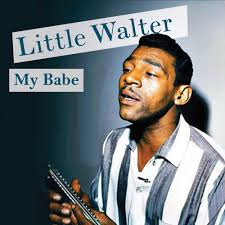
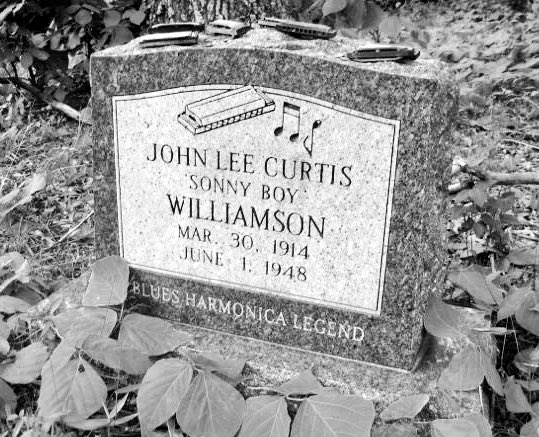
We start our discussion about what makes a blues harmonica and singer important in part 1 (#66). There we find it isn't necessarily about popularity, but rather, contributions to the direction of the music that matter most. John Lee Curtis a.k.a. Sonny Boy Williamson is the first of the significant figures in post war urban blues who stands in front of a band singing the blues and accompanying themselves with a ten hole harmonica. There are literally hundreds of artists who play this role over the past eight decades, but we should consider only a few as important.  After Curtis, the next one is Marion Jacobs a.k.a Little Walter. He takes the harmonica playing blues singer figure in directions even John Lee Curtis would not imagine. 

Similar to Curtis, Jacobs migrates to Chicago (Louisiana) in search of success as a blues musician in 1946. He is already an accomplished blues harmonica player, but his goal is to become a success as a blues singer who accompanies himself on the guitar, not the harmonica. You may recall from the previous blog (#66) that up until Curtis turns the ten hole harmonica into a lead instrument, it is not taken seriously as an instrument by many people, and consequently, it is heard mostly in a supporting role. Curtis' success alters this perception quite a bit in the 40s, but during the 50s, Jacobs will push the little instrument further into the limelight, and in the process change the way we hear the blues harmonica forever. 

His debut as a recording artist in '48 is in a supporting role for a recording by bluesman Floyd Jones. It is an unremarkable record, and only of interest to Jacobs completist.  However, within two years Jacobs is playing harmonica as a side man in the Muddy Waters Blues Band. This is where his fortunes change, and he begins his journey into the history books. .

One of the songs Jacobs performs with the Waters band is a 12 bar instrumental he calls Your Cat Will Play. The band uses the tune as a show opener and closer, but it captivates the imagination of the audience every night enough that it becomes a most requested song. This audience approval is encouraging enough to the young harmonica player that it pushes him away from his sideman position, and toward becoming a bandleader. He records Your Cat Will Play for the Chicago label Checker in 1952 where it becomes Juke. The rest is history.

Remember, Curtis is the first blues harmonica player to popularize the instrument as a lead instrument which forces him to develop new phrases for it. Jacobs takes that challenge to the next level with Juke. He isn't just playing lead phrases to compliment the song lyrics; he is using his harmonica as a new and important voice in blues. It is an extremely significant contribution to blues harmonica, and Chicago blues in the early 1950s. Juke will shoot up to number 1 on the R. & B. charts in '52, and stay there for 20 weeks. Its success catapults the 20 year old Jacobs, now known by his stage name Little Walter, into stardom.

Decades later and Juke is still the only harmonica instrumental to ever make it to the number 1 spot on any music chart, and  secures the tune as a blues standard for the next seventy years. It is difficult to find a single reputable blues harmonica player who does not cover Juke. Paul Butterfield never officially records the instrumental, but if you can find a copy of Murray Lerner’s documentary on the Newport Folk Festival 1963-65, Festivalthere is a clip of Butterfield with his young blues band performing a very energetic version of the tune.

Let’s take a moment to review some basic blues harmonica techniques that we discuss in part 1, and then apply them to Jacobs harmonica style. He uses the same tongue blocking technique for producing sound on his harmonica that Curtis does. Also similar to Curtis, he also plays mostly in second position, which gives blues harmonica players easy access to the minor pentatonic scale with its all important blue notes (minor 3rds and 7ths). 

Jacobs is quite competent in any position on the harmonica, but uses second position most often. (Juke is in 2nd position).

Just as John Lee Curtis benefits from the rapidly improving of amplification technology of his era, Jacobs also makes good use of advancing technology. By the 50s the amplification and recording technology is better than at any time in history, opening the doors to many possibilities for innovative artists like Jacobs. He is also using the same technique to amplify his harmonica that Curtis pioneers in the 30s and 40s by placing the harmonica on the face of the microphone and cupping his hands around the two. However, the difference is when Jacobs does it, the sound system is so powerful that it becomes overloaded and creates distortion. Most people might hear noise and lower the volume, but Jacobs hears something that sounds like a saxophone. It is a completely new sound for the blues harmonica, and he will use it to create a signature sound. This new sonic palette will change the way many players approach their instrument, and the way listeners hear the blues harmonica forever. 

The success of Juke  must ring a bell for Jacob’s record label because after its successhe starts recording more instrumental harmonica pieces, and in the process creates something no other harmonica player before him does. He uses distortion, sometimes a chromatic harmonica, and sound affects like delay, echo, and reverb to create the Little Walter sonic experience. The other unique thing he starts to do is improvise like a jazz musician. 

As a matter of fact, his new sound resembles a saxophone, and while he probably doesn't coin the term, it may well be the beginning of the Mississippi Saxophone label. Two of the most prominent sax players of the era, Louis Jordan and Charlie Parker must serve some inspiration for some of his new phrases. However, not everyone is impressed with the new harmonica sound though, as critic Paul Oliver observes Jacobs' Mississippi Saxophone as a capable but crude substitute (for a saxophone). If you would like to hear a good example of Jacobs improvising, listen to his '57 instrumental Teenage Beat. (see link below)

Another important contribution Jacobs makes to Chicago blues is his unprecedented commercial success. He records a whole new catalogue of exciting blues songs during his career. Remember, Curtis experiences sustained commercial success during his brief career too, but it is in the limited market of the south and northern industrial cities. Jacobs tops that achievement with 14 top ten songs between '52 and '58, all of which sound like a cross between John Lee Curtis and Louis Jordan. Many of these tunes are still part of most  blues band's repertoire even today. 

Earlier we discuss Jacobs first number 1 hit in '52, Juke, but his second hit in 1955 is worth a closer look too. His label is now Chess Records, and employs the brilliant blues arranger, session leader and songwriter, Willie Dixon to write for Jacobs. He writes the song My Babe specifically for young bluesman in about '53, but it takes the Jacobs a couple of years to agree to record the new song.

The melody of My Babe is based on the gospel standard made famous by Sister Rosetta Tharpe This Train (Is Bound for Glory). Blues has a long history in the Christian community as being The Devils Music, so when Jacobs releases My Babe, they must hear it as yet another sacrilege act by a young bluesman. 

Ray Charles does something similar in the same year when he transforms It Must Be Jesus into I Got a Woman, and his label releases it as single in January of '55. Chess releases My Babe in early February of  '55, and not only does it eclipse Charles’ tune on the charts, My Babe spends 19 weeks in the top ten R.&B. charts - including 5 weeks in the number one spot. No other bluesman before Jacob, or since, has ever experienced as much mainstream pop success as Marion Little Walter Jacobs does in the '50s.

Unfortunately, Jacobs' career as the most successful bluesman of his generation is waning by the end of the 50s. It isn’t just his music though, as most Chicago blues in general is faltering by the end of the decade.  There are at least a few possible reasons for this dynamic. Firstly, most of the bluesmen of the 40s and 50s are aging, and the younger audiences begin to view their music as the music of their parents. The younger generation of listeners are also gravitating to younger artists like Ray Charles, James Brown and Sam Cooke, Jacobs' music is starting to sound dated to them. Also, the rising Civil Rights Movement which hears blues as an ugly connection to a history of oppression which doesn't help the situation. 

Then there is Rock and Roll. This blues based music is the most exciting new music of the younger generation, but it is bad news for 1950s blues artists like Jacobs. Music is similar to all art, it needs constant growth to remain vital, or it faces stagnation and eventual death.

These factors must weigh heavily on the minds of Jacobs, and most of the other Chicago blues artists of the 50s. It must seem that post war Chicago blues might suffer the same fate as Dixieland and become a relic. However, there is hope for the future that none of them envisages. An unforeseen group of young fans are noticing Chicago blues in general, and Jacobs in particular. 

A collection of young white British rock artists will be the first to shine a light on Chicago blues and Jacobs in the early '60s. Then a tight collection of local Chicagoans will expose the music to an international audience.  Jacobs doesn't know it, but a young white blues harmonica player by the name of Paul Butterfield will eclipse his success and become the most important exponent of Chicago blues in history. As we will discuss in part 3, Butterfield doesn't seem to share much in common with Curtis or Jacobs, but will become the next most important bluesman who stands in front of his band singing blues and accompanying himself with a ten hole harmonica. He will take the harmonica and its music in directions never before imagined.  

Jacobs' career is all but over by the end of the 50s. His last hit is in '58, he does tour, even reaching an
international audience, but his unapparelled success is behind him. Making matters worse, he is a long suffering alcoholic with a very violent temper. He dies as a result of head injuries sustained in a south side street fight  at only 37 on February 15th 1968. 

Finally, as with all important artists, the ultimate jewel in their crown, is their artistic legacy. They must inspire younger artists to replicate and build on their music. Since his appearance on the charts with Juke in 1952 there are scores of blues harmonica players who point to Jacobs as an inspiration for taking up the instrument and Chicago blues. The list reads like a who’s who of the blues, rock and even country harmonica world for the past seventy years: James Cotton, Jr. Wells, Mick Jagger, Magic Dick, Charlie McCoy, Kim Wilson, Charlie Musselwhite, William Clarke, and of course Paul Butterfield. 

Some people consider Jacobs as the last of the great bluesman figures who stands in front of a band singing blues and accompanying themselves with a ten hole harmonica, but as we shall see in part 3, Paul Butterfield will assume this mantle, and take the little instrument and its music to its largest audience in history. Stay tuned.


Friday, January 15, 2021

#66 Why Spread the Butter? Part 1: Paul Butterfield and Sonny Boy Williamson #1

Every genre of music history has its important historical figures. These are artists who, regardless commercial success, make significant contributions to the genre. The history of the  great American folk music we call blues is no different. Here too, we find figures whose endowment stands apart from the work of their contemporaries deserves positive acknowledgment from both fans and critics.

There is a subgenre of blues that we will discuss here which focuses on post-war urban electric harmonica playing bluesmen. This subgenre is usually played men who stand in front of band singing blues and accompanying themselves with a ten hole harmonica. This figure has been common since the 1930s and is still very active in blues well into the 21st century

In part 1, we will begin with the original harmonica playing bluesman figure with John Lee Curtis a.k.a. Sonny Boy Williamson #1 (I will refer to him as Curtis), then explore Marion ‘Little Walter” Jacobs, (Jacobs) in part 2, and finally Paul Butterfield (Butterfield). Throughout their careers, these three  artists make very significant contributions which are often overlooked by fans and critics of the subgenre.    

So, what is the criteria used to determine how these three artists hold the title of important historical figures in post war urban harmonica blues? Firstly, they do something with their music that no contemporary or predecessor does. Secondly, they intentionally use physical techniques in conjunction with technological innovations to create a unique sound, Thirdly, they create body of work (songs) which become part of the standard blues canon, and their music changes the direction of the genre for at least one generation.

The first example is Tennessee bluesman John Lee Curtis who adopts the stage name of Sonny Boy Williamson early in his career. He is part of The Great Migration of black Americans from mostly rural parts of the southern states to large industrial cities like New York, Detroit and Chicago. The estimate is that 1.6 million people make this journey in search of a better life, - one of the largest recorded migrations in history. One of the few comforts these migrants can afford to bring is their music, and so hundreds of musicians looking to capitalize on this need are also part of the migration too. In fact, if you look at the biographies of many great blues artists from the early to mid part of the twentieth century they most often originate in the southern states.  

Curtis arrives in Chicago in 1934, and secures a job playing his ten hole (diatonic) harmonica as a studio musician with a budget record label specializing in Race Music called Bluebird. It is here that he develops his talents playing on hundreds of recording sessions with colleagues like Big Bill Broonzy, Roosevelt Sykes, and Washboard Sam. It should be noted here that Curtis’ main instrument, the ten hole harmonica is considered a side instrument at this point, a mere toy by many, definitely not a lead instrument. He will change this reality during his brief career.

One of the main problems singers and guitarists have up until the mid-1920s is being heard over the louder instruments in the band. The P.A. (Public Address) systems have been around since the before the turn of the century, but it isn't until the second wave of recording in the mid twenties that singers and acoustic instruments are being successfully amplified with greater accuracy. Then, in 1936 Jazz guitarist Charlie Christian starts using a pickup on his acoustic guitar with the intention of using it as a solo instrument. So, as new technological  innovations become popular, ambitious artists like Curtis hear opportunity.    

He places his little harmonica on the face of a microphone, cups his hands around them, and now the tiny two by four inch harmonica can compete with the volume of any instrument in the band. This must be a eureka moment for Curtis! However, it presents some new challenges that only an innovator and creative artist can hear as a positive opportunity.

One of the things Curtis successfully creates is a new collection of lead phrases for the blues harmonica, and in the process changes the vocabulary of the instrument for the next several decades. As a matter of fact, if a you are playing blues harmonica in the 21st century, you are probably using some phrases John Lee Curtis created in the 30s and 40s. Quite the contribution!


Before we go further, let’s briefly look at some harmonica playing techniques that will help us better understand some of the significant contributions that Curtis, then Jacobs and finally Butterfield do for the harmonica. Firstly, most ten hole blues harmonica players produce a note on their instrument by using a technique called tongue blocking. This technique works by placing the mouth over four holes of the harmonica, and then using the tongue to block two or three of the holes. After that is done, the player can either draw or blow air through the harmonica to produce a single note. The advantage of using this technique is that the quality of note, (the tone), that the player produces is quite full. It is unlikely that this is a Curtis innovation, but he does use on most of his recordings. (James Cotton is also a good example of this technique in action)

Another technical innovation that allows Curtis to make important contributions is a system called positions. This means that the player uses the harmonica in a different key than the song. For example, while the band is playing in the key of G the harmonica player will play a C harmonica in what is referred to by blues harmonica players as second position. If you play in second position, your root note is the second hole draw, which is G. This will provide the harmonica player and opportunity to play a complete minor pentatonic scale (the blues scale). The other interesting feature of using the second position is that most of the needed notes are draw notes, and the player can create an almost vocal sound by bending notes into pitch. Curtis often uses this second position because it affords him an opportunity to create melodic opportunities which has not been as widely explored before he starts recording.

If  some readers of this piece do not play the harmonica, but find you were not lost by during the last couple of paragraphs. Thank you!  

So, why is this brief technical information relevant to understanding some of the important contributions Curtis makes to post war urban electric harmonica blues?  Well, as we discuss above, with upgraded amplification equipment, Curtis now has access to a new instrument some call the electric harmonica. Secondly, he is using the more flexible second position, and thirdly, this technique offers him the opportunity to create new phrases for the instrument. 

One of the many great advantages offered to ten hole harmonica players is that a very creative player can really make the instrument a very individual voice in a blues.  As an example, next time you listen to a Curtis song, notice the sharp staccato attack of his phrasing, and how he bends some notes. This could be a reflection of the fact that he suffers with a speech condition called childhood-onset fluency disorder - which means he stutters and/or slurs words when speaking - but not while singing. He apparently incorporates his condition into his phrases on the harmonica, and in the process creates new vocabulary for the instrument - most of which are still in use today.   

Here is another reason why John Lee Curtis a.k.a. Sonny Boy Williamson #1 is such an important
contributor 
to the post war urban electric harmonica blues. He writes in whole or in part a catalogue of songs which become industry standards for several decades after he dies. One example is his first success, Good Morning Little School Girl (1937).  Even if you can’t remember ever listening to his version, you can be sure that some other rendition by another artist has entered your ear. There are great versions by blues artists such as Lightin’ Hopkins, John Lee Hooker, Muddy Waters and many others. The 60s blues/rock boom brought numerous new versions of the tune by well known artists such as The Grateful Dead, Johnny Winter, and of course, Paul Butterfield ('64). Good Morning Little School Girl is only one example of the songs Curtis contributions to the blues canon.  

Another example is Curtis' version of Robert Johnson’s Stop Breakin’ Down. It too have become a blues standard. His final success is just before he dies in  1947.  Shake the Boogie, it climbs up to number 4 on the Billboard’s Race Records charts 

Unfortunately, the first important urban blues singer who fronts band while singing and playing an amplified harmonica dies too young! The victim of a violent street robbery, Curtis dies at only 34 years of age.  He is at the peak of his popularity in 1948, and will remain one of the most underappreciated blues artists of the twentieth century. If we were to remove John Lee Curtis from post war electric harmonica blues, we may never has been able to enjoy artists like Little Walter or Paul Butterfield. 

Finally, every truly important artist must inspire at least one younger generation of artists to emulate his style, and as you can see from this list, his influence it very active well after his passing. Accomplished bluesmen such as Big Walter Horton, Jr. Wells, Muddy Waters and Billy Boy Arnold are only a few of the artists who acknowledge Curtis' influence on their music.

 However, while most of these artists are memorable contributors to the genre, there is only who will build on Curtis' techniques and become one of the most important post war electric harmonica players of the twentieth century, Marion Jacobs a.k.a. Little Walter.  

Here is a short note about another influence Curtis has on post war urban electric harmonica blues. His music and public profile is so prominent throughout the south and northern industrial cities during his career that he becomes a victim of what we who live in the modern cyber world call Identity Theft After his death there are many who want to capitalize on his success and some assume his stage name Sonny Boy Williamson. The most famous example is Mississippi bluesman Alek ‘Rice’ Miller. He changes his stage name to Sonny Boy Williamsonand until his death in 1965, has a successful national and international career recording and touring under the stolen name. This is the reason why when blues enthusiasts mention Sonny Boy Williamson, there is often a pause and then the question: Do you mean Sonny Boy #1 or #2. 

Stay tuned for the next blog on Why Spread the Butter coming soon. Thanks for reading!


Sunday, April 23, 2017

# 65 Horn From The Heart:The Paul Butterfield Documentary

Every generation has pop music heroes who briefly capture the imagination of the mainstream market with catchy melodies. The marketing departments of their record labels are always quick to provide fans with a shallow biography that employs descriptors like great or ground breaking, but most of that process is about crass commercialism rather the music. Unfortunately, too many of these heroes have careers that just bump and grind across the stage for what seems like only an hour or so before they disappear into the shadows, where they are heard no more.

Then there are our anti-heroes who recoil from that mainstream spectacle in favor the opportunity to create their art on the quieter periphery. It's in that place that they are more likely to create a body of music which resonates with several generations of listeners who are not fooled by the mainstream antics. These artists often become the most significant contributors to popular music, rightfully earning descriptors like great and groundbreaking.  

A good example of this type of artist is America's first guitar hero Michael Bloomfield. When he is a comparatively obscure  guitarist in the mid-sixties, Bob Dylan offers him a lucrative position as the principal guitarist in his band, but the idealist rejects the offer with all the passion of a 19th century French artist who believes in l'art pour l'art. Bloomfield doesn't want the mainstream spotlight, he wants to practice his craft with the fledgling Paul Butterfield Blues Band.

There are many in the mainstream who think Bloomfield's decision is naive, maybe even unwise, but the virtuoso guitarist hears an energy coming out of Paul Butterfield many don't understand yet. He hears the band's 23 year old leader interpret urban blues with the skill of a journeymen communicating the urgency of someone about to commit murder or make love - but never in between. He knows that Paul Butterfield is the real deal, and is quick to publicly announce his commitment telling filmmaker Michael Lerner,  Butterfield is something else, he feels it. He's in there all the way. He is a blues singer. There is no white bullshit with Butterfield.  It is more than just an calculated endorsement from one a colleague to another. This is a recognition from a respected artist in his own right that Paul Butterfield is not just some white kid aping the songs of older blues men, but rather a man able to lead urban blues to the next step in its evolution.

If we compare early Butterfield band recordings with all other young blues bands of the era, we hear an artist reaching for a dream of transcending the confines of genre, race and all other convenient mainstream industry labels. It is a quality that surpasses technique, natural talent, and is intuitively recognized by the listener as something more emotionally complex. As Butterfield confides to one interviewer, The blues to me is any kind of music that has a heavy feeling. Music is a universal thing. You feel music, you play music. It doesn't belong to a black man. It doesn't belong to a white man.  It isn't just the attitude of an artist as a young man that sets him apart from herd, but his desire to travel an ambitious road, one which will not always be paved. If Butterfield is to free himself from these shackles of the status quo, he will need to listen with big ears, employ immense  ingenuity, and demonstrate a unique ability to lead people toward the realization of his dream.

One of Paul Butterfield's most overlooked talents will be his strength as a bandleader. Similar to a few other great leaders like Duke Ellington, he consistently demonstrates an extraordinary ability to recognize skilled musicians, and lead them to a place where they want to create rather than decimate. Consider the numerous musicians he enlists for various incarnations of his Butterfield bands, and you should notice that many of them will permeate popular music for the next two generations, and make their own important contributions as influential instrumentalists, bandleaders, session players, songwriters, inventors. It is this overlooked talent as a leader that often denies Paul Butterfield recognition as one of the twentieth century's greatest bandleaders. 

However, the most significant contribution of Paul Butterfield's legacy is his music. He starts out his career with a dream of a new music, and we now know from his body of work that he succeeded. We have eleven official albums which are always a very hip, yeasty blend of blues, rock, folk, jazz, R&B, gospel, all of it anti-pop. It is this profound legacy that places him in the enviable position of an early pioneer in a new genre of music which will become known as Americana.  Almost as impressive is the fact that three decades after his death, with minimal industry promotion, and no grueling road tours, all of his albums are still in print. It is an monumental feat very few artists enjoy.

These important accomplishments come at a cost to anti-heroes though. Since they are not producing product for mainstream markets, record label accounting departments tend to neglect them, and then many trade journalists underrate their contributions. In spite of the fact that Paul Butterfield is as important an artist as Charlie Parker or Miles Davis, until now, there have been no extensive biographies, or documentaries that single out his enormous contributions to popular music. Outside snippets of shallow biographies found in old trade magazines we know very little of Paul Butterfield the artist. There are distant voices like veteran Jazz writer and broadcaster Jim Gallert who says, This man is so underrated. People talked about Miles Davis as the harbinger of jazz rock, but Paul Butterfield was doing this fusion between jazz and blues in a different way, but those insightful words are scarce. The last three decades since his passing have shown us that the people who keep Paul Butterfield's contributions alive are in fact his devoted fans.

As a testament to the reality, consider this anecdotal evidence: In the mid-sixties a self-described folkie by the name of Sandra Warren has her first encounter with Butterfield's music when buys an Elektra Records sampler called Folksong '65. The album features the band's youthfully bold version of their song Born in Chicago.  Similar to so many other young people of era, something about the attitude conveyed through the music resonates inside her, and she rushes out to buy his first album, The Paul Butterfield Blues Band. Then the band is booked to play several nights at Cafe Au Go-Go in New York City's bohemian neighborhood of Greenwich Village, and she goes to hear them live, not once, but several times. She is transfixed enough that his music will now play a recurring role in the soundtrack of her life. What Warren doesn't know then is that her love for his music will inspire her own dream. One which will demand that she listen with big ears, employ immense ingenuity, and demonstrate a unique ability to lead people toward making her dream a reality. Sandra Warren's dream will be to make a documentary about the story of Paul Butterfield.

Part of her task as the producer is to enlist a talented team who will make the project into a definite success. The key member of Warren's team is award winning director John Anderson. He has documented some of the most important contributors to popular music of the last century, from pop icons The Beach Boys, and Paul McCartney to punk poet Patti Smith, and the king of Chicago blues drummers, Sam Lay, so he is perfect fit for a documentary on Paul Butterfield.  

It should be noted that Anderson's new film Horn From The Heart: The Paul Butterfield Story is not concert film, or a story about Paul Butterfield's music, we already have his impressive body of work. Anderson uses extensive historical research, fresh insightful interviews with family, close friends, and former colleagues to peel back the multiple layers of Butterfield's life to tell us the story of the man who created the music.  
  
Paul Butterfield belongs to a very elite group of artists in history because of his unique gifts, but he was human too. Viewers will hear very poignant stories of battles between his passion for music, and own his emotional frailties. They will feel his deep love for family which is complicated with his self destructive obsessions. Then there is betrayal of his trust by his associates which places him on a painfully tragic journey. All of it is peppered with wry humor, and heartwarming anecdotes from people who really knew him well. After viewing the film, the viewer will realize that while Paul Butterfield really did belong to an elite group of artists, he was also one of us.   
  
Paul Butterfield never did succumb to the trappings of the mainstream pop music heroes, always preferring to practice his craft in the relative quiet found in the periphery. He didn't bump and grind across the stage for what seemed like only an hour performing flamboyant stage antics, nor did he write cute pop songs.

Similar to other important anti-heroes in music such as Charlie Parker, Mike Bloomfield and Bob Dylan, Paul Butterfield refused to submit to mainstream expectations, and instead set out to create a new music, one that was not shackled by genre or race, and he succeeded. We have always had his music, but until now, we have known very little about the man who created the music. John Anderson's  Horn From The Heart: The Paul Butterfield Story fills that void with his documentary about one of America's most important artists. It will delight fans, and finally give Paul Butterfield his rightful place in history.

  https://www.hornfromtheheart.com/


Sunday, December 18, 2016

#64 Paul Butterfield's North South

It is a testament to an entrepreneur's talent when he no longer needs to seek out customers because they are coming to him. This is the enviable position Albert Grossman achieves during his career as the manager of several very successful artists. His greatest strengths are the ability to sense artistic talent, and then sell it. Many businessmen of his stature might choose to stay in the city to show off symbols of their success, but he decides to move to rural New York instead. It is here that he settles in the hamlet Bearsville, and begins building a comparatively modest, yet impressive empire.
  
Similar to Chess Records in Chicago, or Motown in Detroit, Grossman designs his Bearsville Records empire to be a one stop shop for the 1970s music industry. It is replete with temporary housing for his growing collection of employees, restaurants, a recording studio, a support staff who skillfully attend to every need of his growing stable of artists, and a head office for publishing.  All of this points a man with a well developed business acumen fueled with raw ambition. If he were less sophisticated, he might hang a shingle outside his office that says, It you aren't growing, you're dying.

More specifically, his most obvious strength is boardroom negotiating, but then there is his often overlooked talent of refraining from micromanaging the careers of his artists. The unwritten bargain he has seems to have with his artists is they are free to create music and he sells it. It is a powerful combination, but it is also his greatest weakness. Of all the careers he manages, Paul Butterfield's is a good example of everything that is both good and bad about Albert Grossman's management style.

Remember, in 1965 he agrees to manager Butterfield's career
because he hears something visceral in the twenty three year olds brand of blues. Then, in spite of the fact that Butterfield never becomes a comparatively strong commercial success, he remains loyal to him, always treating him as an artist of remarkable distinction. The fact is Paul Butterfield probably would never have sustained success if it were not for Albert Grossman.  As Danny Goldberg remembers, On the few occasions I saw him with Butterfield,  Albert treated him with the greatest respect,  as someone who, regardless of whether he was making money from him or not, was to be regarded as a major figure.  However, their relationship must come under intense questioning between 1975 and 1980, as Butterfield stops living up to his end of the manager/artist bargain.  

Butterfield's downward spiral seems to begin during the collapse of his second band Better Days. It is here that the young blues man begins to fall prey to his own demons. The solace he seeks through self medication with alcohol and street narcotics strips away most of his self confidence, and then slowly chips away at both his personal and professional life. His first solo project, Put It In Your Ear, shows fans what happens when one of the century's greatest bandleaders abandons his role to outsiders. After that failure, the only two projects that seem to keep his career floating are his impassioned performance at The Last Waltz, and then his brief, yet high profile position in Levon Helm's RCO All stars.  

Then there is the failed attempt to resurrect  his solo career with an appearance in September of '78, on
the very successful Germany television show Rockpalast, but that too is failure. Former Butterfield Blues Band guitarist Buzzy Feiten agrees to act as band leader, leaving Butterfield to just show up,  but he can't seem to muster the courage to make more than a minimal contribution. He arrives at rehearsals in New York with no material, and a reluctance to even participate in the project.  Later, Grossman plans to resurrect Butterfield's career by releasing the concert recording as new blues rock album similar to his original Paul Butterfield Blues Band, but he deems it inferior Butterfield, and the project is shelved. 
When Butterfield returns stateside, he forms the Danko/Butterfield Band with friend and fellow addict Rick Danko. They turn in some adequate shows but mostly, the short barroom tours are a manipulation of the system to support their alcohol and narcotic fueled lifestyle. It isn't long before rumors and eye witness accounts of personality conflicts cause their performances to become unreliable. At one gig, Danko plays only harmonica and Butterfield strums guitar, enraging the fans. Eventually, every show becomes a potential powder keg of unpleasant surprises for promoters, bar owners and fans. In the tightly knit music industry the two former rock stars become known as the dangerous duo.  

It is this pattern of self-destruction that Butterfield tries to address when he confesses to Rolling StoneI
did go through periods of drugs during the seventies. I was doing coke, drinking tequila , some heroin. Right down to the nitty-gritty. Unfortunately, his confession is too little, too late as his marriage has disintegrated, and his career is not far behind. 

These situations often prompt questions from outsiders about the behavior of the bystanders who seem to simply watch catastrophe unfold, so it is fair to wonder about Grossman's role during these years.  It is possible that he is demonstrating a blind loyalty, or looking for opportunities for a final payday. After all, it is common knowledge that he does purchase a life insurance policy on Janis Joplin shortly before she dies of a drug overdose. Maybe he was plotting ways to posthumously capitalize on Butterfield's decline  too- we will never know.

However,  in Grossman's defense, Danny Goldberg remembers,  Albert Grossman stayed loyal. He really loved Paul, and it broke his heart to see him fall apart the way he did. But Albert never presumed to tell people  how to live their lives. His philosophy was self-reliance. It is easy, to smugly look back at the seventies, and wonder why the common error of bystanders to addiction catastrophes justify their lack of intervention by professing loyalty, but the 70s is a different time. It seems that in his own way, Grossman thinks the best remedy for Butterfield decline is to encourage him to get back in the studio, and solve his problems through hard work.

Contrary to Butterfield's career prognosis, Grossman's career is still on a steady ascent. In the late seventies he is expanding his business into new markets. Similar to Woodstock, the music scene in Memphis is also a melting pot of great American music, only with a richer history that easily dates back into the 19th century. The success of postwar labels like Sun, Stax, and Hi are a testament to the vibrancy of the Memphis scene, but as the industry fragments to other urban centres during the seventies, the Memphis labels become vulnerable to corporate takeover.   

It is during this period of decline that Grossman negotiates a deal with Willie Mitchell, and his label Hi Records. The agreement comes with the option to employ the talents of the famed singer, songwriter, arranger, producer, and businessman, and in the process help the Bearsville artists. Mitchell has an impressive production resume that includes luminaries such as Ann Peeples, and of course his star achievement, Al Green, so the transaction is a coup for Grossman. While the deal to expand into Memphis does serve several Bearsville's artists well, for Butterfield it spells disaster.  

One of Mitchell's first Bearsville projects is with Butterfield's girlfriend Elizabeth Barraclough, who in 1979, records her second album Hi with Mitchell in Memphis. She is happy enough with the results of the project that she returns to Woodstock, and suggests to Butterfield that he and Mitchell might be a good fit. It has been five years since he has released any product, so he goes to Memphis with Barraclough, and according to Joe Perry,  ...the Hodges brothers and Memphis horns would come around, and Paul knew of them. He fit right in with these guys. The Butterfield/Mitchell team should be a winning combination, but in spite of Mitchell's pedigree, the project will become yet another Butterfield disappointment.   

Similar to the Germany project, Butterfield has no sustainable ideas, and again recoils from his responsibilities as a leader, deferring decisions to Mitchell. Unfortunately, Mitchell is not familiar enough with Butterfield's music or public persona, and so, he erroneously decides to record  an album of what is suppose to be Memphis funk , soul and R & B album, but the idea is doomed.  As Barraclough remembers, It would have been nice to say to Paul and Albert, 'Let's wait a year and get some good tunes together, 'Albert was always ready to go with an artist if he said he had songs together, so he let Paul. I would later learn from other A&R guys that stopping projects for lack of material wasn't uncommon..... And I would do it myself with some projects at Bearsville. But Albert's word final word was often, 'I don't care - let them make the record.' We'd had a few disasters with Paul that we had to shut down, but the Memphis thing got made anyway.  At this point, most might conclude that problems are the material, lack of involvement by Butterfield, and apparent neglect from the people at Bearsville Records, but they will be pale in comparison to what happens next.  

Butterfield's relentless abuse with alcohol, various narcotics, combined with poor dietary habits take a toll on his body. In 1979 he develops an inflammation in his lower intestine called diverticulitis, which he does not address properly, and it develops into a more serious infection. The untreated inflammation causes a perforation of his intestine, which then allows puss and waste to enter the abdominal cavity. This damages the membrane which protects the internal organs known as the peritoneum, creating the condition known as peritonitis

If his condition sounds dire, that's because it is. Peritonitis is painful, and if not addressed quickly, will lead to certain death. While in the Memphis studio, he collapses, and is rushed to the hospital. He later will reflect that at the time, he thinks the pain is the result of too much barbeque, but he is running out of that kind of good fortune. Once a doctor diagnoses his peritonitis,  he is hospitalized undergoes immediate surgery where his colon is severed, and a colostomy bag connected, allowing the damaged intestine area to heal. Then,  the recovery advice by the doctors is that he remain stationary, discontinue his abusive lifestyle, and alter his diet, but these sound instructions are lost on someone armed with Butterfield's almost childish sense of invincibility. It will not be long before a returns his old lifestyle.  

A couple of years later he will confide in Don Snowdon of the L.A. Times, To make a long story short, my
intestines burst...... I ended up having four operations and you don't realize  what it takes out of you, energy wise., he said, You think you can come right back , so I went back to work and herniated  the scar tissue in my stomach. I had three hernias from playing the harmonica, so it was a vicious circle. Sure it occurred to me that might not be able to play anymore, but I got that Irish ornery thing going and said, I'm going to make it through this and I did with a lot of help from God. I came through the wars there. Most rational people will interpret these events as a dire warning from the body to the mind that it is time for a lifestyle change, but just because people have the ability to reason does not preclude that they use that ability.  

In spite of the health tragedy, the album is completed, and Bearville releases in January of 1981. It will prove to be a tough sell to fans of the once great blues man though. This writer can't help but wonder if at some point, the marketing department at Bearsville is at a loss for what to do with the album. Then in a desperate attempt to put a positive spin on it, conjure up the idea of masking its obvious weakness by comparing it to his ground breaking album East West by calling it North South.  It is a nice try, but no one is fooled by the marketing shell game.

Firstly, the album has none of the gutsy boldness of East West, or as one critic laments, Butterfield's 1980 album North-South was neither bold or brash, just sterile and irrelevant. Only the slow closer Baby Blue sounded like authentic Butterfield.  Then there are other critics who dwell on its use of strings, synthesizers, and pale funk arrangements, or use words like fluff to describe the contents of North South.

In an effort to bring some context to the next criticism, it might be useful for readers who are not familiar with 70s pop to take this short digression. By 1981, the dance music trend known Disco has run its course in U.S.. Part of the reason for its demise is because of a nationally run campaign by radio stations, and trade magazines which often pokes fun at the pop music as being too artificial. It isn't long before kids are wearing t-shirts emblazoned with loud insult such as Disco Sucks. So, by 1980, the word Disco is a word millions use to insult, not compliment, an artist's music. This relates to North South  because there are critics who hurl the ultimate insult at it. They take it one step further than just calling it Disco pushing it to next level calling it Bad Disco. For an artist of  Butterfield's caliber, such criticisms must be devastating. Histrionics aside, North South  is technically excellent, and actually boasts some great grooves like Get Some Fun Out of Life. 
There are not many positive reviews of North South, and some critics seem more disappointed with the audacity of Butterfield's willingness to deviate so far from his established persona as a blues man of great distinction.  The final nail in the coffin for his new album is when David Fricke pens this one star review for Rolling Stone, Considering that East West is the title of one of the best albums Paul Butterfield ever made, it's ironic that North South should be the title of his worst.
The combination of Butterfield's blues savvy and former Al Green producer Willie Mitchell's once magic R&B touch undoubtedly looked good on paper. But Butterfield's  singing is barely a smoky shadow of  its old husky roar. Though the artist can still blow blues harp with the same spirit and soul he displayed he displayed in his Butterfield Blues Band days,  there simply isn't enough harmonica playing on North South to make wading through Mitchell's anemic production, the spineless  arrangements  and hopelessly lame material.
Catch a Train, Slow Down, and the nonsensical Footprints on the Windshield Upside Down are lukewarm funk, with Butterfield and his harp fighting a losing battle against  an army of clichéd horns and strings. The star's one harmonica showcase turns out to be a syrupy instrumental ballad , Bread and Butterfield. And his token  blues workout is - of all things - a Neil Sedaka number, Baby Blue, which closes the record. It's a sorry ending to a truly sad LP. The problem with album is that, it is the right material, just recorded by the wrong artist at an inappropriate time.

In an effort to promote album sales Bearsville releases Living in Memphis/Footprints on the Windshield Upside Down in the U.S., and they even attempt to crack the European market with I Get Excited (Me Excito) and Bread and Butterfield, but nothing gains traction. Sadly, in the minds of critics  Paul Butterfield is no longer seen as a trailblazer in American music, only an opportunistic follower of passé trends.

In spite of his doctor's advice, Butterfield does mount a tour with a five piece band, often with his girlfriend on keyboards, even sporting matching black t-shirts that advertize My Father's Place eatery in New York, but even those shows are hit and miss. Similar to so many other artists from the 60s who survive into the 80s, Butterfield is starting to feel the financial pinch of dwindling audiences. He puts  together a tightly planned one hour show that promoters milk by taking in two audiences in one night. It is grueling way to make a living any artist, but especially for a ill musician without a critically acclaimed album to promote.   


It is a testament to an artist's talent when people constantly reach out to them with support for their art, but that encouragement is futile when the artist rejects it. The chronology of Paul Butterfield's mental and physical decline seems to begin around the middle of the 70s when he loses his artistic vision.  Even the business acumen of Albert Grossman can't seem to penetrate Butterfield's desire to self-destruct. The obvious question is Why? Possibly, the New York's Lone Star Cafe owner Mort Cooperman shows some insight when says, Paul had the charm of a child,  but he was always fighting these demons.... A lot of people worked hard for him, because he was their hero, but he was on a self-destructive bent. It is a frustrating and emotionally draining dynamic that millions of families and friends experience every day.  Fortunately, Butterfield's his health and career will take a turn for the better, but unfortunately, the worst is yet to come. Stay tuned!